We put the whole plant into one ERP
VAC.UZ manufactures ventilation ducts. The entire path from order intake to shipment — requests, planning, shop floors, the QC station, warehouse, purchasing, finance and the team — now lives in a single system of 24 sections.
Where we started
Every department kept its own notebook
In a plant, data lives in several places: requests in a messenger, the plan on paper, stock in a separate spreadsheet, finance with the accountant. A simple question becomes hard to answer.
- To learn an order's stage you have to call the shop floor
- Stock levels and the purchasing plan are not connected
- The director sees the report only after the month closes
- Client conversations stay in personal accounts
One system, seven areas
We studied how the plant actually works and moved that into the system: each department works on its own screen, but everything writes to one database. Nobody assembles a report — the dashboard fills itself.
- Sales, production, supply, finance, people, facilities and settings
- Role-based access: everyone sees only what is theirs
- A message from Telegram lands straight in the CRM
- Every action is stored with who did it and when
What is inside the system
Below are screens from the live system. The interface is in Russian — that is the language the team works in.
Overview
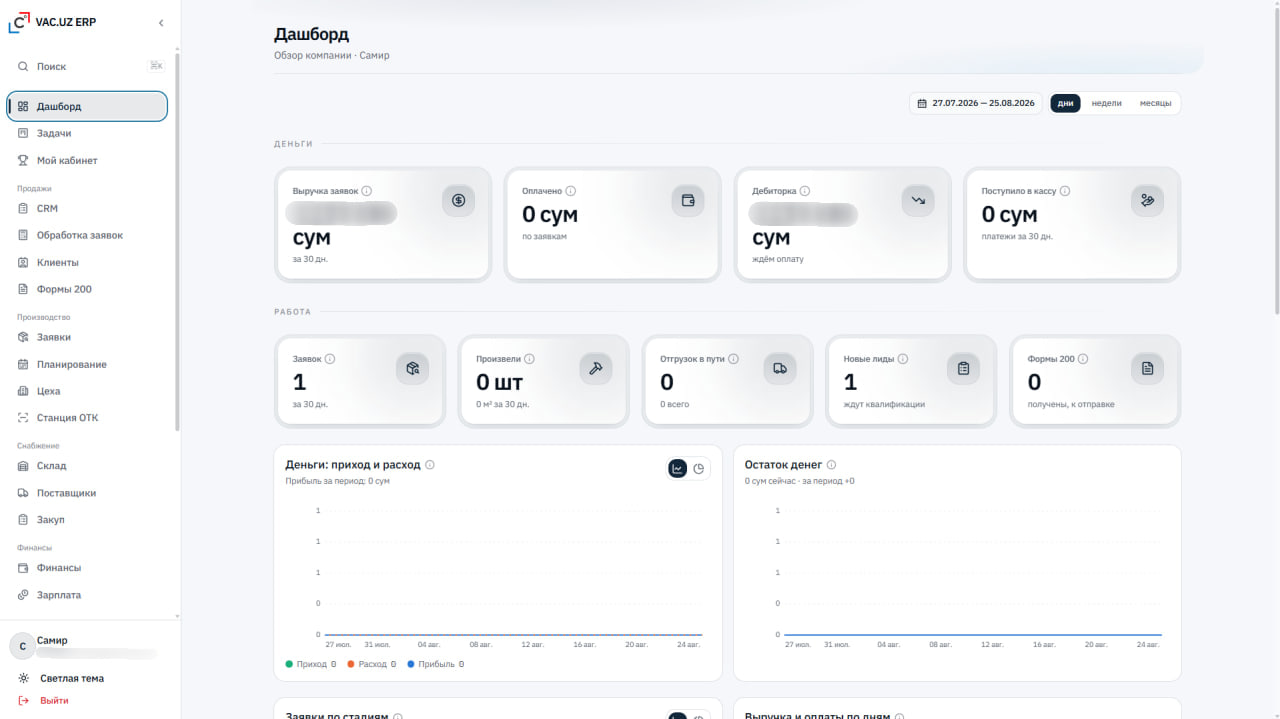
The director's first screen. Money on top: revenue on requests, amount paid, receivables and cash in. Work below: how many requests, how much was produced, how many shipments are in transit, how many new leads are waiting.
- Pick the period: days, weeks or months
- Income, spend and profit chart, plus the cash balance over time
- Requests split by stage
Task board
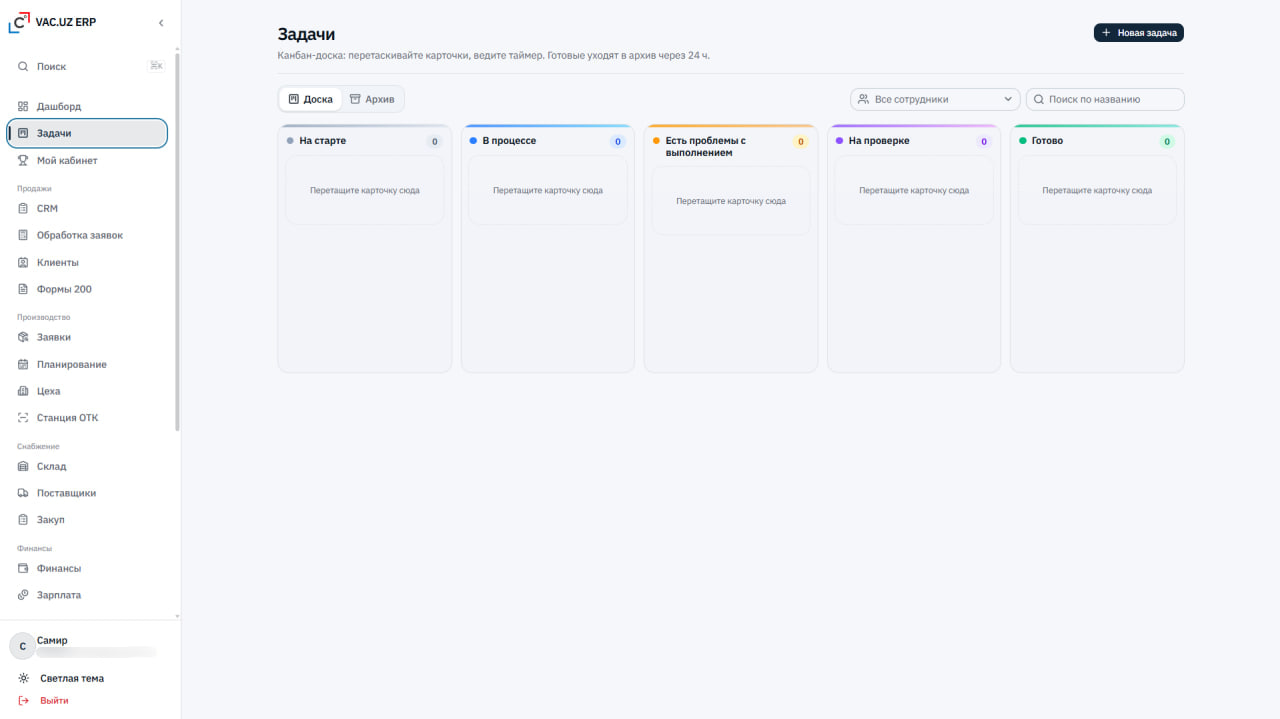
A kanban board of five stages: starting, in progress, blocked, in review, done. Cards are dragged with the mouse, each runs a timer, and finished ones move to the archive after 24 hours.
- A dedicated "blocked" column so obstacles cannot hide
- Filter by person, search by title
- The archive sits on its own tab — the board stays clean
CRM and Telegram
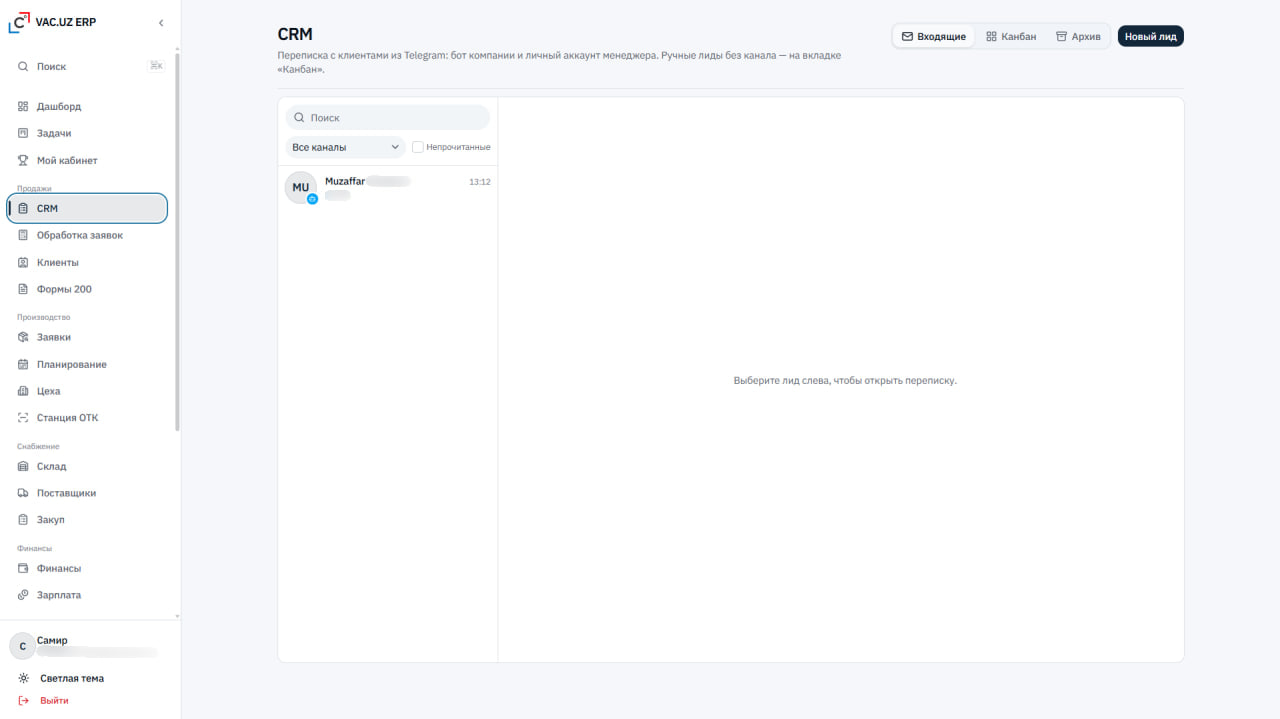
Client conversations stay inside the system. The company bot and the manager's personal account feed one inbox — if someone leaves, the history stays with the company.
- Inbox, kanban and archive — three views
- Filter by channel and an unread marker
- Leads without a channel can be added by hand
Team and roles
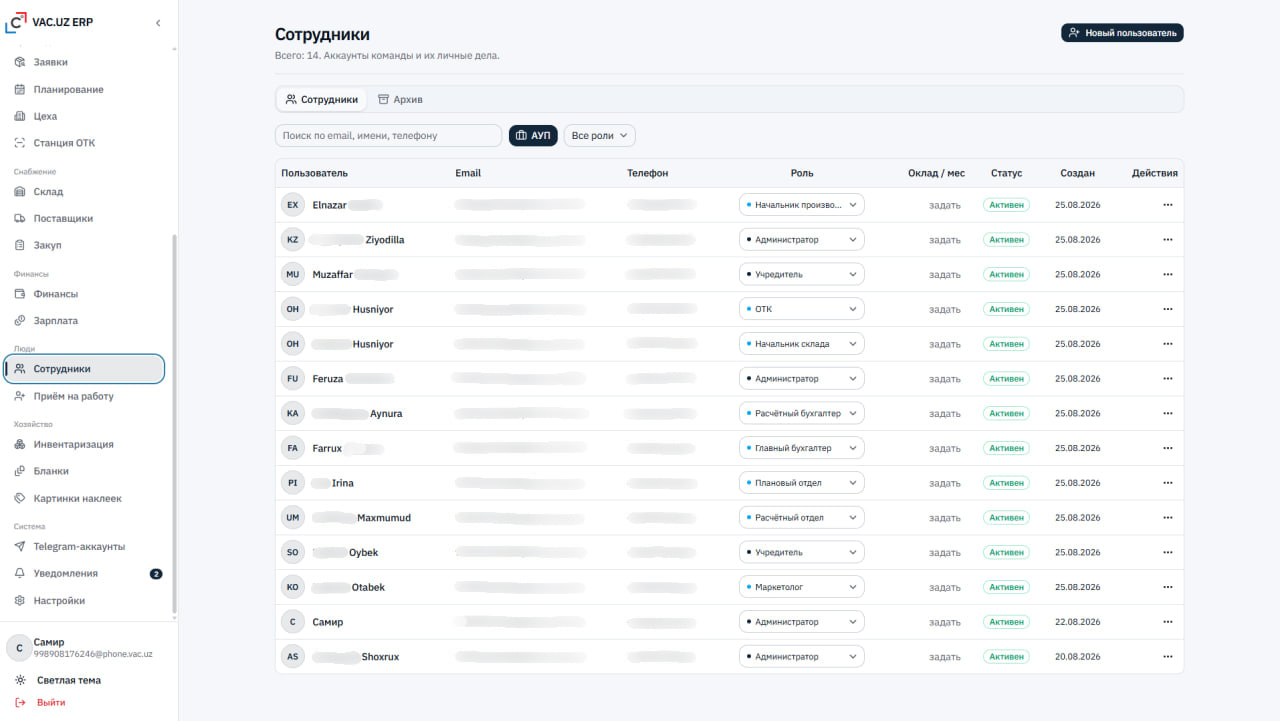
The whole team in one list: who holds which role, what they are paid, whether the account is active. Roles are switched right here — head of production, QC, warehouse lead, payroll accountant, chief accountant, marketer and others.
- Search by email, name or phone
- Leavers move to the archive — nothing is lost
- The role sets the permissions — no separate configuration
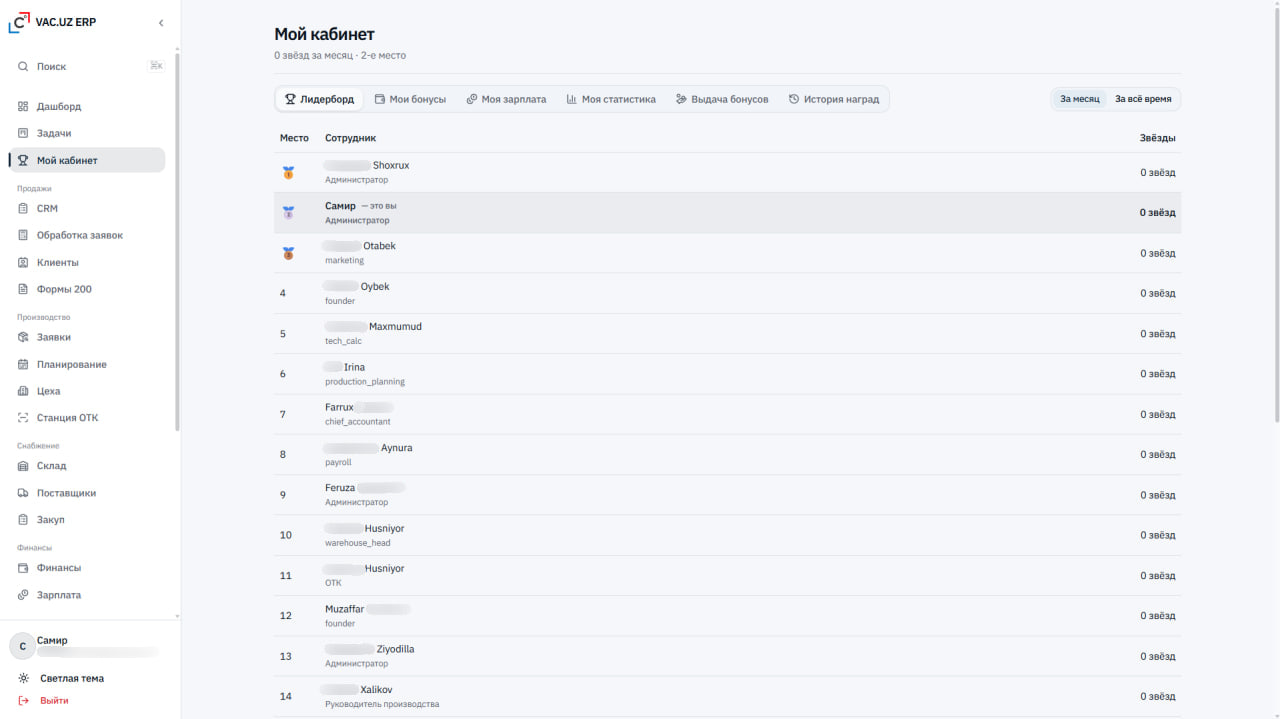
Employee area
Each person gets their own area: ranking, bonuses, pay and personal stats. The star system nudges people to compare themselves with their own last month, not with a colleague.
- Leaderboard for the month and all time
- My bonuses, my pay and my stats — on separate tabs
- Bonus issuing and award history — for the manager
What changed
Sales, production and finance look at the same number — no more copies of spreadsheets.
An order's stage is on the screen — no need to ask around.
Client threads, role changes and every action remain in the system.
Avenir OS
Open the case →ConsultingYakov and Partners
Open the case →TradFi platformDeFi Technologies
Open the case →E-commerceAPEC Asia UAE
Open the case →Does this sound like your process?
No brief needed — write a couple of lines and we'll ask the rest.